
TRUST IN CLIENTS
Crunchfish is a deep tech company developing a device-agnostic generic trusted client application platform for offline payments, tokenized card payments as well as other mobile client / server systems. Crunchfish has been listed on Nasdaq First North Growth Market since 2016, with headquarters in Malmö, Sweden and with a subsidiary in India.
Function before form.
Crunchfish’s vision is people and technology in perfect harmony. A world where technology serves humanity to make everyday life easier. Crunchfish as a deep tech company pioneers the future in radical new ways.
Crunchfish creates solutions for humans. Far too long have humans been forced to adapt to technology, when of course it should be designed the other way around.
Crunchfish has a proven track record of being remarkably responsive to the fast moving industries of digital payments and computer vision. Crunchfish offers versatile and comprehensive platforms in both areas.
We never let technology dictate the function, instead we use the form that is most fitting to the purpose. With a rare combination of courage and technical know-how.
Solution areas
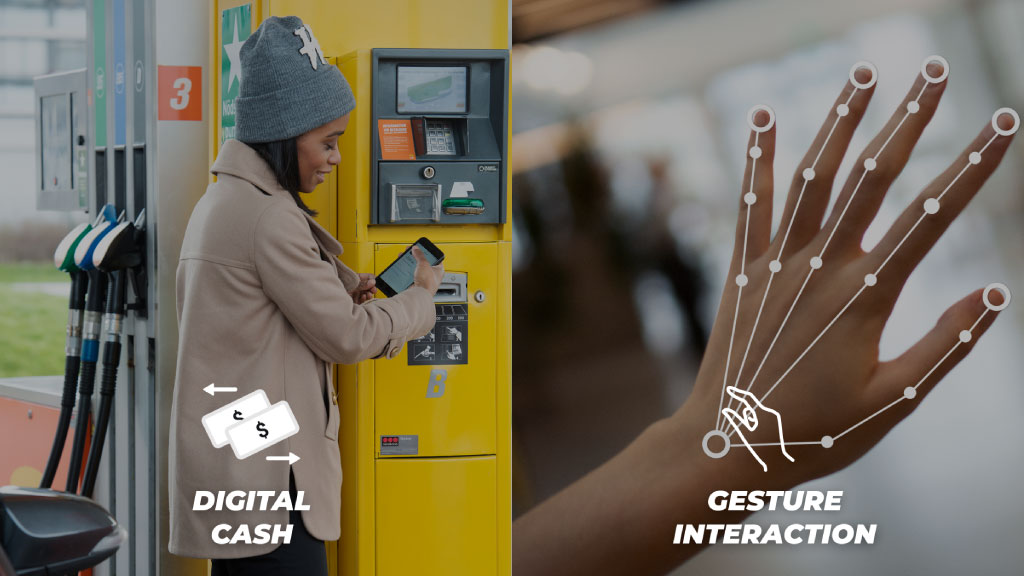
Digital Cash – Offline payments
Crunchfish Digital Cash augments any form of payment, on any form factor – mobiles, web, cards and wearables, on any payment rail – Instant, EMV, CBDC and crypto.
Crunchfish has the bold ambition to take a global leadership position within payments.

Gesture Interaction – Deeply intuitive gestures.
Touchless interaction enable users to interact with devices without touching displays or physical buttons. The solutions are designed for everyday use with exceptional performance, optimised with machine learning for Augmented Reality, Virtual Reality and next generation digital interfaces.


Our core values
Curious
An inspired curiosity drives us to explore the world, adapting technology to human needs.
Creative
Our creative minds combined with deep technical know-how originates radical new ideas and innovations.
Caring
We care about the society we live in, customers and colleagues, always developing sustainable relationships.
Patents
Protected areas
Digital Cash
Gesture Interaction
Our strategy is to protect technology in all of our solution areas and in geographic markets that are deemed to be of importance.
Crunchfish owns its patents and patent applications without any restrictions.
Priorities from 2012.
19
UNIQUE INNOVATIONS
9
GRANTED INNOVATIONS*
*Includes positive International Preliminary Reports on Patentability (IPRP)
